
Donec efficitur, ligula ut lacinia
viverra, lorem lacus.
Donec efficitur, ligula ut lacinia
viverra, lorem lacus.

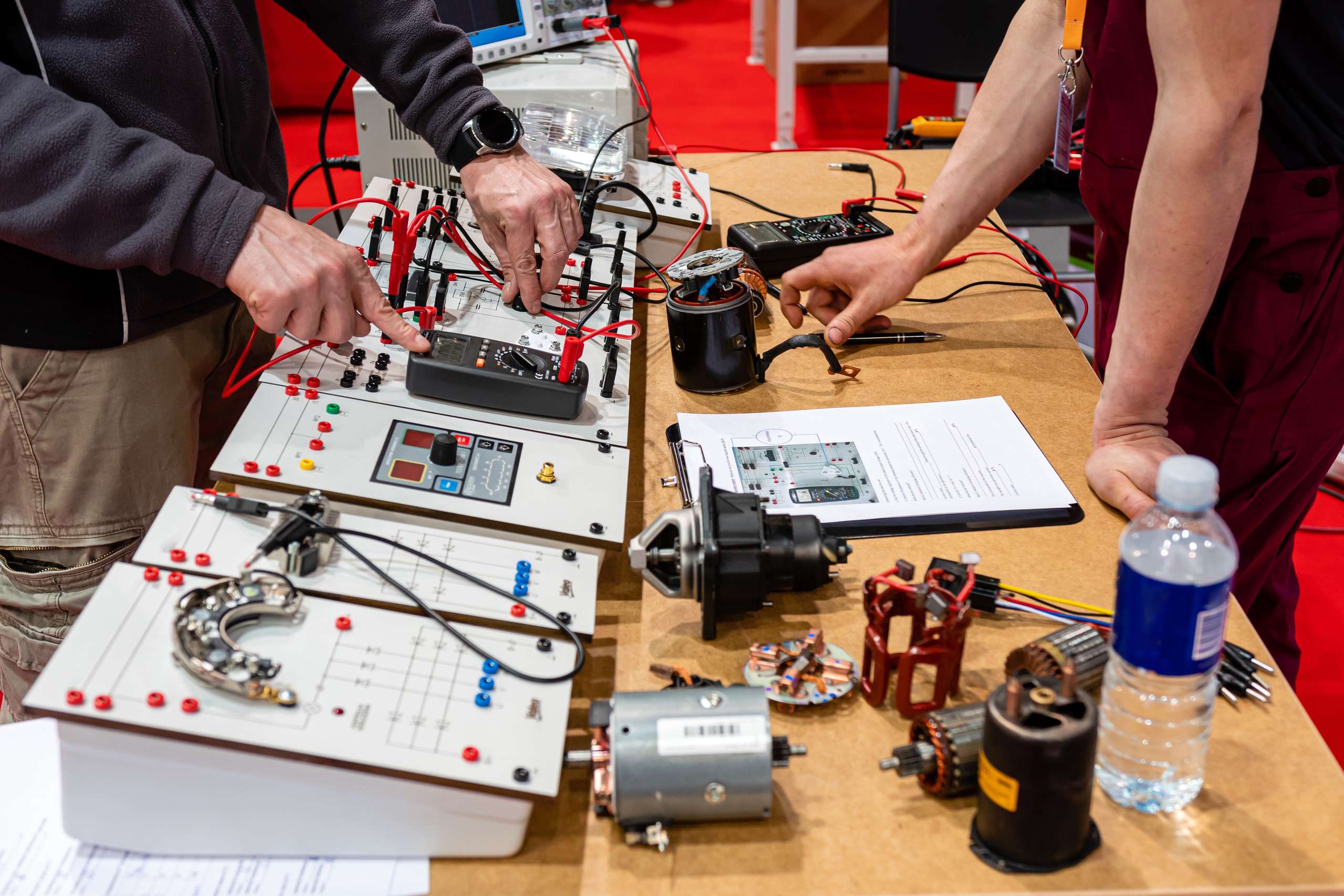
When you first look at a wiring diagram, it may look like a confusing mess of squiggles and lines. But we can make it easier to read by not trying to read the diagram as an image, but as an explanation. Every wiring diagram is actually an explanation of how power flows from a source, through some kind of load or control and back to the source again. Start with the power source (usually labeled live and neutral) and follow each individual wire to see where it leads. Disregard any information you do not understand and simply follow the course of one wire from end to end (like tracing a single path on a roadmap).
One of the biggest problems many novices have is trying to understand a whole diagram at once. This means they’re guessing instead of learning. Instead, redraw the simplified diagram manually, focusing on just the relevant components; say, a light and a switch. As you copy the diagram, explain each part out loud. This makes the abstract symbols into something concrete that you can describe, like “the power comes in here” or “this switch breaks the flow”. The simple act of copying helps you focus on the flow, not the pretty diagrams, so you’ll learn the logic more easily.
A big mistake people make is mixing up physical placement with electrical routing. You may see components drawn far from each other, or neatly lined up on the paper. However, they may be actually located right next to each other inside a junction box. When people wire things up according to their physical appearance instead of their electrical routing, they often get things wrong. Don’t care about the physical distance between two items, just care about where the wires end. If the lines of two wires connect to the same item on the diagram, they must connect electrically in the real world, even if the devices are physically far apart.
You don’t need to do anything fancy to practice. It takes about 15 minutes to trace a simple schematic, cover it up, and then try to draw it again. Then you go back and look at the original to see where you missed a wire or drew a wire flowing the wrong direction. This helps you to learn the standard schematics of things such as how a switch breaks the hot wire or where the load is between hot and neutral. If you are still getting hung up then try to pick a part of the circuit and trace it out in your mind before coming back to the entire thing.
As you get more comfortable with diagrams you start to become more certain in real-world installs where nothing is a guess anymore. You no longer need to ask where the blue wire goes, but you can explain why you connected it to this terminal and that terminal based on what the circuit does. Eventually the mysterious hieroglyphics of the symbols become just a compact representation of groups of components you already recognize, and you start to feel like you’re looking at the circuit diagram like you look at a recipe.